What Should Soap Makers Check Before Ordering Printed Packaging?
By Oliver Smith
21 Views
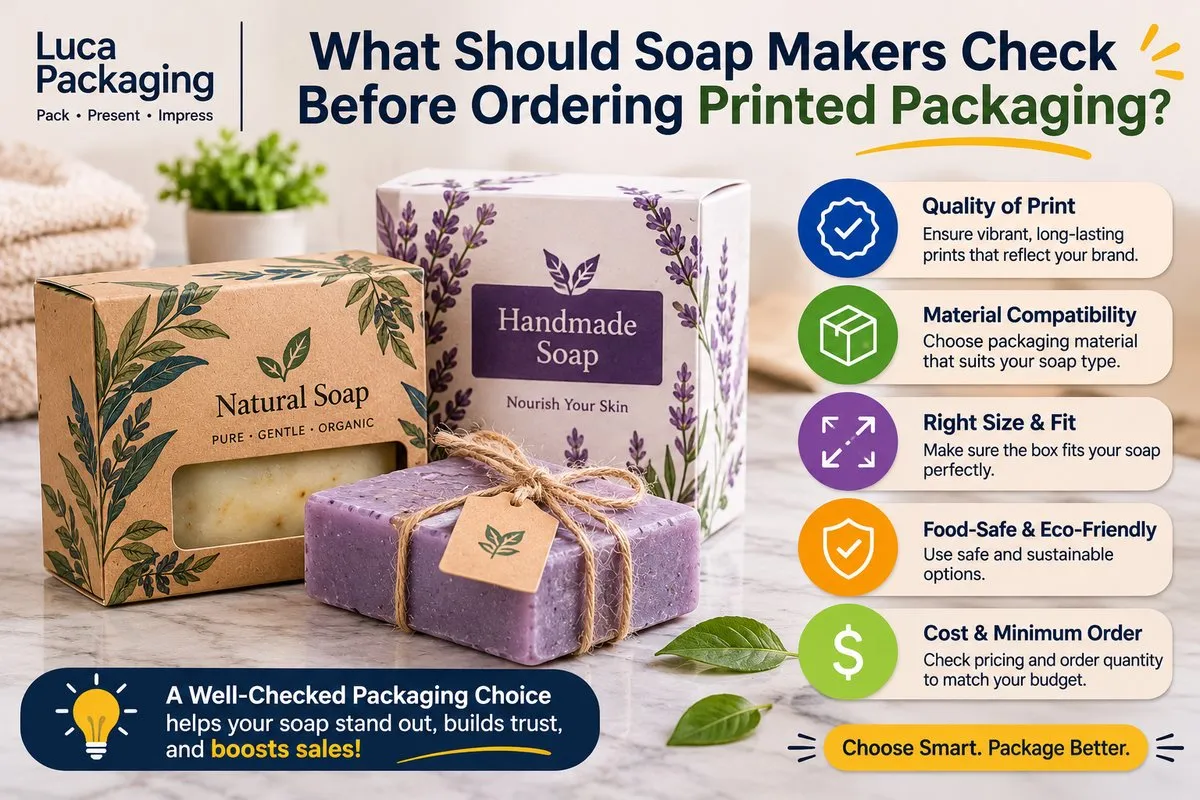
Ordering printed packaging needs to be thought through prior to any expenditure on the part of a soap brand. The packaging design itself should be such as to protect the bar and clearly communicate all the relevant product information. A soap maker should look at the size, the print quality, the strength of the material and the design before they place an order. All of these things can go a long way to avoiding a costly error and will in turn make subsequent orders a lot easier to manage. A bit of planning up front is worth its weight in gold.
Does the size correspond to every soap bar?
Choose the right size in the first instance when placing an order for printed packaging. A box that's too tight can damage the edge of the soap during packaging and the extra space can also allow the bars to shift about during transit. It's important to measure the length, width and height prior to submitting your order details and to check those measurements against actual soap samples. That one small step will go a long way to avoiding a poor fit and will help to minimise any issues when the product is being packed for the stores.
Can the design clearly communicate your brand?
A printed design is the first thing the customer sees with regard to the soap brand. A lot of manufacturers will go down the route of custom bar soap boxes with logos on to promote their business name. A clear logo will help the shopper to identify the product when there are a number of brands on the shelf. Care must be taken with the size and placement of the logo prior to printing though. The text should be large enough to be legible and any additional artwork should never obscure the key details. A good design will give the shopper all the information they need without making the front of the box look cluttered.
What material offers the best protection for the product?
The material you choose will have a bearing on how well the custom soap boxes protect the soap in storage and during transit. A thin material is going to bend when you're stacking up large quantities of finished product. A tougher material will help to prevent scuffing and damage during normal handling. You should always ask for samples prior to committing to a material. You can then compare the thickness, surface and strength of the material to the size of your actual product to ensure you're getting the right one without necessarily having to go down the route of buying any extra material.
Are the printed colours anywhere near what your design is?
Colours look different on a screen to the finished printed product. That's because screens and print all display colours in a different way. Soap manufacturers should ask for printed samples prior to approving any large order and should check that their logo and main design colours are correct. If you're a brand that uses specific colour codes then of course you should provide those. A clear process of approval also helps to reduce the chance of getting the wrong colours.
Does The Brand Name Appear In The Right Place?
You need to look at the front, the sides and the back before you finalise the artwork. Luca Packaging would be worth considering in relation to the printing of a range of soaps in the US. The brand name should be very prominent but not to the extent that it takes away from the useful product information. Manufacturers should of course check the spelling very carefully as a single error can affect the whole order. All printed elements should be checked before final artwork approval.
What details should consumers be able to find easily?
Customers will usually want to know basic information such as what the ingredients are, how much it weighs, the name of the product and who manufactured it. There may also be some instructions or special care instructions for some soaps. This information should obviously be clearly listed by the manufacturer. With little space available the small font can be difficult to read. To make sure you have not missed any information it is important to check each line before printing.
Will the opening style be appropriate for the product?
The opening style can affect how easy it is for the customer to remove the bar from the package. Some packages may have a simple end hole whilst others are split into two separate sections. The right opening style will depend on the size, weight and customer requirements of the bar. Testing with real bars is important to ensure the correct style. If the customer finds it difficult to remove the bar then they may cause damage to the edges of the bar. Using the correct opening style will make the bar easier to handle and keep it looking good.