The Role of RTD Terminal Boards in Turbine Temperature Monitoring
19 Views
Introduction
Temperature monitoring is essential for maintaining safe, reliable, and efficient turbine operations. In gas and steam turbines, temperature variations can indicate changes in operating conditions, potential equipment problems, or developing mechanical faults. Accurate temperature measurement helps operators maintain stable performance and protect critical turbine components. Resistance Temperature Detector (RTD) terminal boards play an important role in connecting temperature sensors to turbine control systems, allowing temperature-related signals to be collected and processed for monitoring and control.
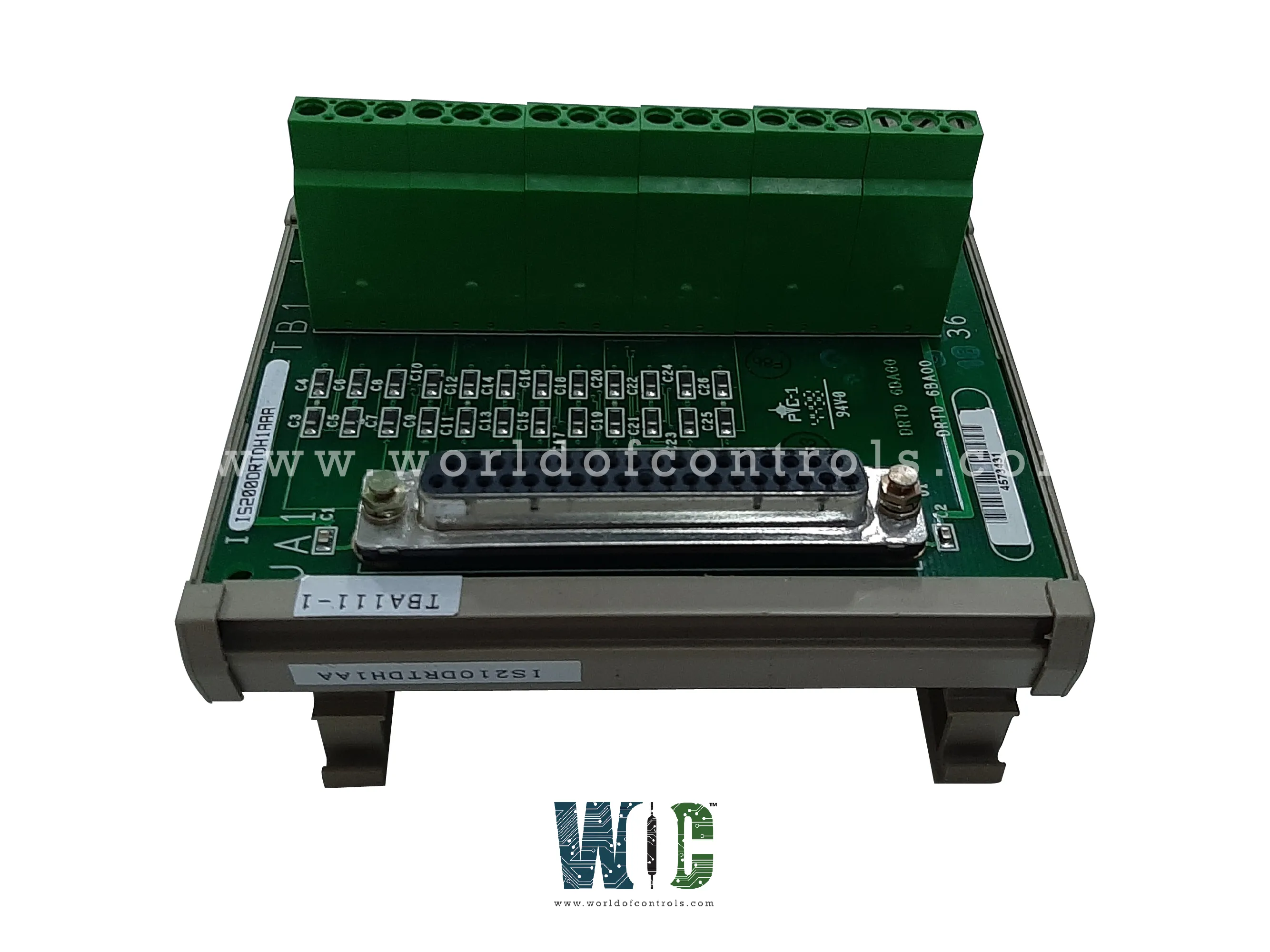
GE Compact RTD Terminal Boards are used in compatible turbine control applications to support temperature input interfacing. They help connect RTD sensors with the relevant control hardware, enabling operators to monitor temperature conditions across industrial turbine installations.
Understanding RTD Terminal Boards
What Is an RTD?
A Resistance Temperature Detector (RTD) is a temperature sensor that measures temperature by detecting changes in electrical resistance. Platinum is commonly used as the sensing material because of its stable and predictable response to temperature variations.
In turbine installations, RTD sensors may monitor bearing temperatures, lubrication systems, generator components, and other equipment where accurate temperature information is important. The specific monitoring points depend on the turbine design and instrumentation requirements.
The Function of an RTD Terminal Board
An RTD terminal board provides an interface between temperature sensors and the turbine control system. It organizes sensor connections and supports the transfer of temperature-related electrical signals to compatible processing hardware.
Depending on its design, the board may also support signal-conditioning and connection-management functions. By providing an organized interface, it helps the control system receive temperature information required for operational monitoring and decision-making.
Key Features of Compact RTD Terminal Boards
Compact RTD terminal boards are designed to support efficient sensor integration in industrial control cabinets. In compatible GE Mark VI turbine control configurations, these boards provide multiple RTD input channels and connect to temperature input processing hardware.
Important features include:
- Multiple RTD input channels: Allow temperature signals from several monitoring points to be connected to the control system.
- Compact mounting design: Helps organize control cabinets and make efficient use of available installation space.
- Reliable signal transmission: Supports the transfer of temperature measurements to the relevant processing hardware.
- Temperature monitoring support: Provides input data that can be used by the control system to identify abnormal temperature conditions.
- Control system integration: Enables temperature sensor connections within compatible turbine instrumentation architectures.
These features help simplify sensor connectivity and support consistent temperature data collection in industrial turbine environments.
Applications in Gas and Steam Turbines
Monitoring Critical Equipment Temperatures
Turbines operate under demanding thermal and mechanical conditions. Temperature monitoring helps operators identify unusual changes that may require investigation. Depending on the installed sensors and system configuration, RTD inputs can support monitoring of bearing temperatures, lubricating oil systems, generator components, and other critical equipment.
The terminal board provides an interface for collecting signals from connected RTD sensors. The resulting measurements help the control system and plant operators assess operating conditions and identify potential abnormalities.
Supporting Operational Reliability
Unexpected temperature increases can indicate problems such as insufficient lubrication, restricted cooling, excessive friction, or abnormal operating conditions. When temperature readings are integrated with suitable alarms and control logic, operators can investigate potential issues before they develop into more serious equipment problems.
Although the terminal board does not independently prevent failures or regulate turbine temperature, it contributes to the instrumentation system that supplies essential data for monitoring, alarms, and control functions.
Installation and Maintenance Considerations
Proper installation is essential for reliable temperature measurement. Technicians should verify compatibility with the installed turbine control system and associated processing hardware. Correct sensor wiring, secure terminal connections, suitable cable shielding, and appropriate grounding practices help minimize electrical interference.
Routine maintenance should include inspecting connections, checking sensor readings against expected operating conditions, and investigating abnormal or inconsistent measurements. Maintenance and replacement activities should follow the applicable manufacturer documentation and site safety procedures.
Conclusion
RTD terminal boards play an important role in turbine temperature monitoring by providing an interface between temperature sensors and compatible control system hardware. Their organized connections, multiple input channels, and integration with temperature processing systems support effective monitoring in gas and steam turbine installations.
By helping deliver temperature information to the control system, these boards contribute to operational awareness, equipment condition monitoring, and maintenance planning. When correctly installed and maintained, they support the broader goal of improving turbine reliability, availability, and operational efficiency.
Related Reading
Why Business & Finance is Transforming the Global Industry Landscape
Welcome to our in-depth exploration of Business & Finance. In an era defined...
Expert Insights: Navigating the Complex World of Business & Finance
Welcome to our in-depth exploration of Business & Finance. In an era defined...