The Future of Contact Center Quality Assurance: AI vs. Traditional Reviews
By Robo Note
100 Views
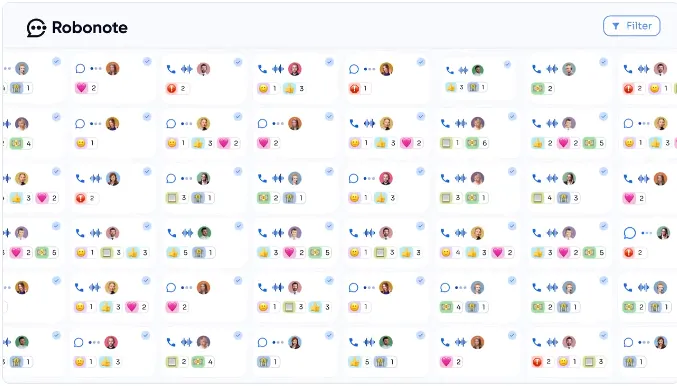
Contact center quality assurance (QA) is undergoing one of the biggest transformations in its history. For decades, QA relied on manual call reviews, human scoring, and limited sampling. While these traditional methods helped maintain basic service standards, they no longer match the scale, speed, and complexity of modern customer interactions.
Today, AI-powered QA systems are rapidly replacing traditional review processes, reshaping how organizations measure performance, ensure compliance, and improve customer experience.
The future of QA is not about choosing between humans and AI—it is about how AI enhances human decision-making to deliver faster, more accurate, and more scalable quality management.
What Traditional QA Looks Like Today
Traditional contact center QA typically includes:
- Manual call listening by supervisors
- Evaluation of 1%–5% of total calls
- Scorecards filled out by human reviewers
- Delayed feedback to agents
- Periodic performance reports
While this approach has been widely used for years, it comes with significant limitations:
- Limited visibility into overall performance
- Inconsistent scoring between evaluators
- Slow feedback cycles
- High labor costs
- Difficulty scaling with call volume
As customer expectations grow, these limitations become more visible and costly.
What AI-Powered QA Brings to the Table
AI-driven quality assurance uses technologies like:
- Speech recognition
- Natural language processing (NLP)
- Sentiment analysis
- Machine learning models
- Conversation intelligence systems
These tools allow QA systems to automatically analyze 100% of customer interactions instead of relying on small samples.
AI QA systems can:
- Automatically transcribe calls
- Score conversations in real time
- Detect sentiment and emotion
- Identify compliance risks
- Highlight performance trends
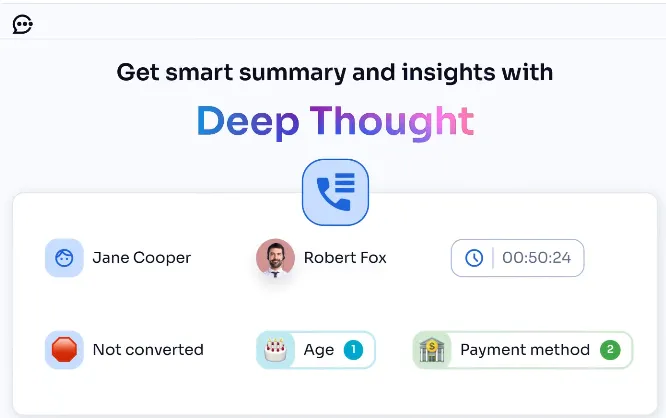
- Generate summaries and insights
This (customer experience analytics platform)shifts QA from a reactive process to a proactive intelligence system.
1. From Sampling to Full Call Coverage
One of the most fundamental changes is the move from sampling to full coverage.
Traditional QA:
- Reviews a small percentage of calls
- Misses most customer interactions
- Relies on limited data sets
AI QA:
- Evaluates every single conversation
- Provides complete visibility into performance
- Eliminates blind spots in customer experience
Just as a circle’s area expands dramatically with its radius, QA coverage expands exponentially when moving from sampling to full-call analysis.
2. Speed: From Delayed Reviews to Real-Time Insights
Traditional QA feedback often takes days or weeks to reach agents. By then, the context of the call is already forgotten.
AI QA delivers:
- Real-time call evaluation
- Instant scoring after interactions
- Immediate alerts for compliance issues
- Live monitoring dashboards
This speed allows organizations to correct problems before they escalate into larger issues.
3. Consistency: Eliminating Human Bias
Human QA reviewers naturally introduce variation:
- Different scoring interpretations
- Mood-based inconsistency
- Subjective judgment differences
AI removes this inconsistency by applying:
- Standardized scoring models
- Uniform evaluation rules
- Data-driven decision logic
This ensures every call is evaluated fairly and consistently across teams and regions.
4. From Reactive QA to Predictive Intelligence
Traditional QA is reactive—it identifies problems after they occur.
AI QA is becoming predictive. It can:
- Detect churn risk signals
- Identify escalation patterns
- Predict agent performance trends
- Highlight recurring customer issues
This allows contact centers to act before problems impact customers or revenue.
5. Lower Cost, Higher Efficiency
Traditional QA requires significant human effort:
- Large QA teams
- Hours of manual call review
- Continuous training for evaluators
AI reduces this burden by automating:
- Call transcription
- Scoring
- Reporting
- Sentiment analysis
This reduces operational costs while increasing coverage and accuracy.
6. Better Coaching and Agent Development
In traditional QA systems, coaching is often generic and delayed.
AI QA improves coaching by providing:
- Specific call examples
- Behavior-based insights
- Skill gap identification
- Real-time performance feedback
Instead of reviewing a few random calls, managers can now coach using complete behavioral data across all interactions.
7. Real-Time Compliance Monitoring
Compliance errors are costly and risky. Traditional QA may only catch violations after review.
AI systems detect:
- Missing disclosures
- Regulatory language issues
- Identity verification failures
- Policy violations
This enables instant intervention and reduces regulatory risk significantly.
8. Customer Experience Becomes Measurable at Scale
Traditional QA struggles to measure emotional and experiential factors consistently.
AI QA can analyze:
- Sentiment (positive, neutral, negative)
- Frustration signals
- Conversation tone
- Resolution satisfaction indicators
This makes customer experience measurable across every interaction, not just sampled calls.
10. The Hybrid Future: Human + AI
Despite rapid automation, the future is not fully AI-driven QA—it is hybrid.
Humans will still play a critical role in:
- Complex case evaluation
- Strategic decision-making
- Coaching and leadership
- Exception handling
AI will handle:
- Data processing
- Pattern detection
- Scoring and monitoring
- Real-time analysis
Together, they create a more powerful and efficient QA ecosystem.
Final Thoughts
The future of contact center quality assurance is being reshaped by AI. Traditional review methods, while still useful in some contexts, cannot keep up with modern demands for scale, speed, and accuracy.
AI transforms QA from a limited sampling process into a full-scale intelligence system that evaluates every conversation, identifies risks in real time, and delivers actionable insights instantly.
The shift from traditional QA to AI-powered systems is not just a technological upgrade—it is a fundamental change in how organizations understand and improve customer experience.
Contact centers that adopt AI early will gain a clear advantage: faster feedback, better agents, lower costs, and a more complete understanding of every customer interaction.
The future of QA is not about reviewing calls—it is about understanding them at scale, in real time, and with intelligence that continuously improves performance.