Ventilation in Men's Textile Motorcycle Jackets: What to Look For
By Jack Harry
132 Views
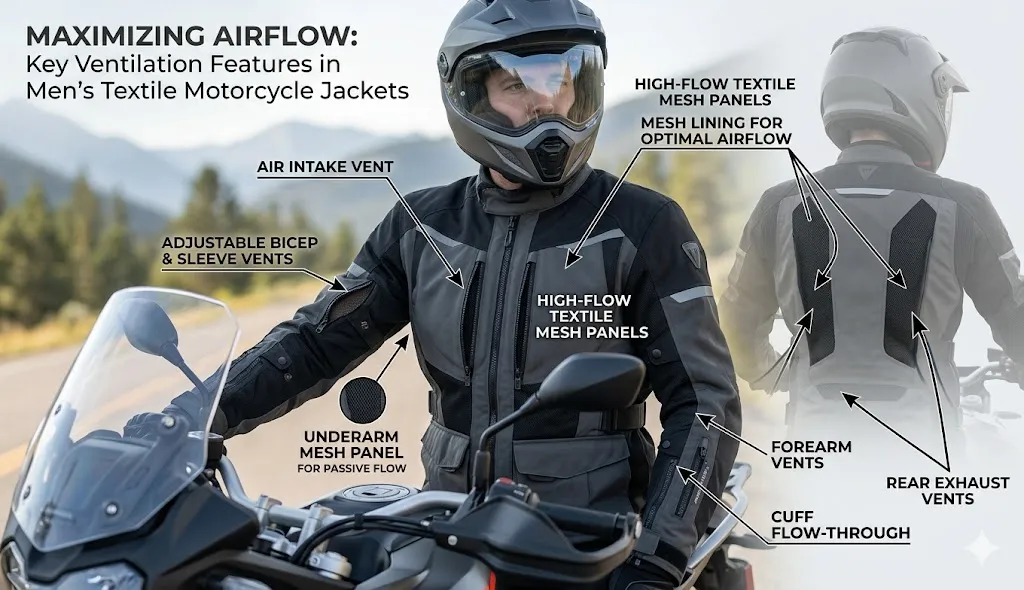
Heat is one of the most underrated dangers in motorcycle riding.
Not the dramatic kind of danger, the slow, creeping kind. You start a ride feeling fine, but two hours into a summer run, you're sweating through your gear, your focus is slipping, and you're making worse decisions than you would with a clear head.
The right men's textile motorcycle jackets solve this before it becomes a problem. Ventilation isn't a bonus feature, it's a core part of what makes a jacket actually wearable in real conditions.
But not all vents are equal. A jacket can have six vents and still feel like a greenhouse, while another with three well-placed vents keeps you comfortable for hours.
Here's what to actually look for.
Why Textile Beats Leather for Ventilation
Before getting into specifics, it's worth understanding why textile motorcycle jackets for men dominate when it comes to airflow management.
Leather is dense and relatively impermeable. Even perforated leather only does so much. Textile materials, Cordura, ballistic nylon, polyester blends, can incorporate mesh panels, zippered vents, and breathable membranes that leather simply can't match.
Mesh vs. Solid Textile
Full mesh jackets offer maximum airflow but minimum weather protection. Solid textile with vents gives you a balance, protection when you need it, airflow when you want it.
Most top rated textile motorcycle jackets for men options sit somewhere in the middle: solid construction with strategic vent placement and sometimes removable mesh panels.
The Membrane Factor
Many textile jackets include waterproof membranes like Gore-Tex or similar technology. These work great for rain, but they can trap heat.
Look for jackets with membranes that are removable or that use breathable waterproof technology, not just waterproof. The difference matters on warm days.
Understanding Airflow, It's Not Just About Vents
This is where most buyers go wrong. They count vents like they're checking a spec sheet without thinking about how air actually moves through a jacket.
Intake and Exhaust
Airflow works on a simple principle: air needs to come in somewhere and exit somewhere else. Without both, you just have hot air trapped inside your jacket.
Intake vents are usually on the chest or front of the arms, facing into the wind as you ride. Exhaust vents sit on the back or under the arms where air can escape.
A jacket with only chest vents and no exhaust is essentially a wind trap. It pushes air in but has nowhere for it to go. You end up with pressurized warm air instead of actual circulation.
The Chimney Effect
Quality jackets use what's sometimes called a chimney effect, cool air enters at the front, travels across your body, and exits at the back or shoulders.
This creates actual circulation rather than just blowing air at your chest. The difference in comfort is significant, especially on longer rides.
Types of Ventilation Systems
Zippered Chest Vents
The most common type on men's textile motorcycle jackets.
Positioned at the upper chest, these zip open to allow direct airflow to your core. They're easy to adjust while riding and provide noticeable relief when opened.
What to check: Are the zippers facing the right direction to catch wind? Do they open wide enough to make a real difference? Can you operate them with gloves on?
Underarm Vents
Less visible but genuinely effective. Underarm vents target one of the sweatiest areas on your body while also helping exhaust air from the jacket's interior. They work best when combined with chest intakes.
Some jackets use zippered underarm vents that extend down the inner sleeve, these are particularly good for high-heat conditions.
Shoulder and Upper Back Vents
These act primarily as exhaust points.
When chest vents push air in, shoulder and back vents let it escape. Without these, chest vents lose most of their effectiveness.
Look for back vents positioned between the shoulder blades, that's where heat accumulates most. A single large back vent typically outperforms multiple small ones.
Sleeve Vents
Found on the outer forearm or bicep area, sleeve vents add airflow to your arms.
On long rides, arm temperature matters more than most riders expect. Sleeve vents are the difference between arms that stay comfortable and arms that feel wrapped in plastic wrap.
Perforated Panels
Some textile motorcycle jackets for men use perforated fabric panels instead of traditional vents.
These provide consistent low-level airflow across a larger surface area. They don't move as much air as a large open vent but work continuously without any adjustment needed.
Good for moderate temperatures. Not enough on their own for serious summer heat.
Vent Placement: Where It Matters Most
Upper Chest Priority
Your chest and core heat up fastest because that's where your body generates the most heat. Chest vents should be your first priority.
They should be high on the chest, not mid-torso, to catch maximum wind while in riding position.
Back Vent Position
Vents positioned between the shoulder blades are most effective. Vents too low on the back don't exhaust air efficiently because it pools toward the top of the jacket interior.
Don't Ignore the Collar
Some jackets have collar vents or mesh lining at the neck. This might seem minor but neck cooling has an outsized effect on overall comfort.
Your carotid arteries run through your neck. Keeping that area cooler helps your whole body feel less overheated.
Features That Make Ventilation Work Better
Interior Mesh Lining
A mesh interior lining creates a small air gap between the jacket material and your body. This gap allows air to circulate across your skin rather than the jacket sitting directly against you and trapping heat.
Cheap jackets skip this. Good ones include it. Check what the jacket is lined with before buying.
Removable Liners
A quilted or thermal liner that can be removed entirely transforms a cold-weather jacket into a summer option.
Without the liner, airflow increases significantly. With it in, you've got a jacket that works in cooler conditions.
This is one of the most practical features on handmade mens textile motorcycle jacket options, you get year-round usability from one piece of gear.
Adjustable Cuffs and Hem
Sounds unrelated to ventilation, but it isn't.
Tight cuffs and hems trap air inside the jacket. Adjustable versions let you open them up slightly, creating additional exhaust points for hot air to escape.
On really warm days, loosening cuffs and hem makes a noticeable difference alongside whatever vents you have open.
Waterproof Layer Positioning
If your jacket has a waterproof membrane, where it sits matters for ventilation.
Outer waterproof layer with inner mesh: better ventilation, less weather versatility.
Waterproof membrane as a removable inner layer: best of both worlds. Remove it on dry days for maximum airflow.
Fixed waterproof membranes that can't be removed are the least versatile option, they compromise ventilation even on dry hot days.
How to Test Ventilation Before You Buy
The Bend Test
Put the jacket on and lean forward in riding position. Do the vents open up or does the riding position close them off?
Some jackets have chest vents that face correctly when standing but point away from the wind when you're actually on the bike.
The Glove Test
Can you operate the vent zippers while wearing gloves?
If you have to pull over and take your gloves off every time you want to adjust airflow, you'll stop using the vents altogether.
Check the Airflow Path
With the jacket on and all vents open, have someone shine a flashlight through the chest vents. Can you see light through back vents?
It's a simple test, but it tells you whether there's actually an airflow path through the jacket or just vents that don't connect to anything useful.
Seasonal Considerations
Summer Riding
Maximum ventilation is the priority. Look for:
- Large chest vents that open fully
- Underarm and back exhaust vents
- Removable liner
- Mesh interior lining
- Perforated panels as a bonus
Spring and Fall
You need adjustable ventilation, able to close down in the morning and open up by afternoon.
Zippered vents with good range give you this control. Full mesh panels that can't close down are frustrating when temperatures drop.
Year-Round Riding
Invest in a jacket with a removable thermal liner and a waterproof layer that can also come out.
- In summer: remove both liners, open all vents.
- In winter: add both liners, close vents.
- In between: mix and match.
This is where men's textile motorcycle jackets genuinely outperform leather—the layering system gives you adaptability that leather can't match.
Red Flags When Shopping
Watch out for these:
- Vents with no exhaust counterpart, airflow without exit is useless
- Decorative vents, zippers that open to solid lining underneath, not actual openings
- Fixed waterproof membranes, kills ventilation on warm days
- No mesh lining, jacket sits directly on your skin, trapping heat
- Vents positioned for standing, not riding, always check in riding position
The Bottom Line
Good ventilation in textile motorcycle jackets for men comes down to airflow design, not just vent count.
You want intake and exhaust working together. You want vents positioned for riding position, not standing. You want a mesh interior that lets air circulate across your body. And you want adjustability so you can control temperature as conditions change.
Get those things right and your jacket works with you instead of against you, keeping your head clear, your body comfortable, and your focus where it belongs: on the road.