How Driving Lessons Can Help You Pass Your Test Faster in Wongarbon
89 Views
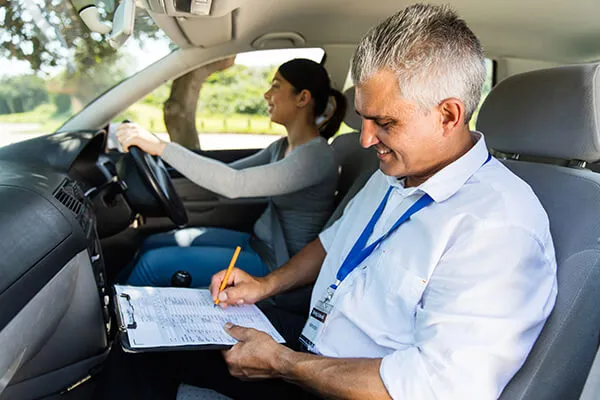
For a Wongarbon resident, failing means rebooking at the Dubbo Service Centre on Macquarie Street, paying the test fee again, and waiting out the gap before you can try once more.
In NSW, you must wait at least 7 days before rebooking. Combined with the time to secure a new appointment at the Dubbo Service Centre, a failed test can cost you several weeks.
Professional driving lessons are the most direct way to close that gap
.
How Professional Lessons Accelerate Your Progress
The 3-for-1 Logbook Benefit
Under the scheme set by Transport for NSW, one hour of structured driving with a licensed NSW instructor counts as three hours in your logbook.
You can claim this for up to 10 hours of lessons, giving you 30 total logbook hours from those sessions (your 10 actual lesson hours plus 20 bonus hours credited by Transport for NSW). That reduces the remaining supervised driving you need to complete with family by 20 hours.
Habit Correction Before It Is Too Late
Professional lessons focus on the exact skills the NSW test assesses. An instructor teaches you to:
- Do a visible head check every time you change lanes or merge, not just a glance
- Come to a complete stop at every stop sign, every time, with wheels fully stationary
- Manage your speed smoothly across school zones, speed limit changes, and low-traffic residential streets
- Check mirrors every five to eight seconds and make the movement visible to an observer
- Signal correctly and in good time before every turn and lane change
An instructor makes sure these behaviours are automatic before you sit the test, not discovered as problems after you have already failed.
Route Familiarity with the Dubbo Test Area
Local instructors who work around Dubbo are familiar with the roads around the Macquarie Street Service Centre. The test routes from that centre cover Dubbo's streets, including roundabouts, school zones, give way intersections, and varying speed limit sections.
Practising driving lessons in Wongarbon on the actual streets used in the test is a significant advantage. A learner who has spent hours in unfamiliar territory on the day of the test is at a disadvantage compared to one who has driven those same roads with an instructor and had specific hazards and decision points pointed out in advance.
Pre-Test Preparation
Many instructors offer a dedicated pre-test session, typically a one-hour lesson on the day of the test that serves as a warm-up. This settles nerves, refreshes the specific habits the examiner is watching for, and gives you the chance to drive in a familiar dual-control car before switching to the test environment.
Some instructors also offer the use of their car for the test itself. For learners in Wongarbon whose family vehicle might not be in the best condition or is unfamiliar to drive confidently, this removes one more variable on an already high-pressure day.
The Safer Drivers Course
Once you have 50 actual on-road hours recorded (not counting 3-for-1 bonus hours), you are eligible for the Safer Drivers Course. Completing it adds 20 hours to your logbook.
Combined with the 30 bonus hours from ten professional lessons, that is 50 hours of logbook credit from structured learning activities. In practical terms, it reduces the actual supervised driving you need to complete from 120 hours to 70.
The course itself covers risk management, hazard awareness, and safe following distances. These directly align with the hazard response and decision-making zones that the examiner assesses on test day.
Self-Supervised Practice Alone Often Falls Short
Most families approach the logbook hours by driving the same familiar routes repeatedly: around Wongarbon, into Dubbo along the Mitchell Highway, back home. Those hours count toward the 120-hour requirement, and they build basic comfort behind the wheel.
But supervised practice with a family member tends to reinforce whatever habits the learner already has, including the bad ones. If a learner does not perform full head checks before lane changes and no one in the car corrects it, it becomes a habit.
Missing head checks is consistently cited by driving instructors as one of the most common reasons for failing the NSW driving test, and the third missed head check is an automatic fail.
A licensed driving instructor spots these errors because they are trained to watch for them and they correct them before they become automatic.
A Practical Approach for Wongarbon Learners
If you are working toward your P1 licence from Wongarbon, here is a sensible sequence to structure your preparation.
Step 1. Start with a few professional lessons early in the learner stage, before you have logged many hours. This sets the right habits from the beginning rather than trying to unlearn bad ones later.
Step 2. Complete your home practice using the correct techniques from those lessons. Drive a variety of routes, including into Dubbo, to build comfort with different traffic conditions.
Step 3. Once you have 50 actual on-road hours recorded (not counting any 3-for-1 bonus hours), complete the Safer Drivers Course for the 20 bonus logbook hours and the additional hazard training.
Step 4. In the weeks before your test, book a series of lessons that specifically focus on the Dubbo test area. Ask your instructor to cover roads near the Macquarie Street Service Centre and to flag anything they notice in your driving that could cost you marks.
Step 5. In the weeks before your test, book lessons that specifically practise the streets around the Macquarie Street Service Centre. Ask your instructor to flag the roundabouts and school zones on the routes they expect the examiner to use.