How to Choose the Right Salicylic Acid Serum
By Purist
40 Views
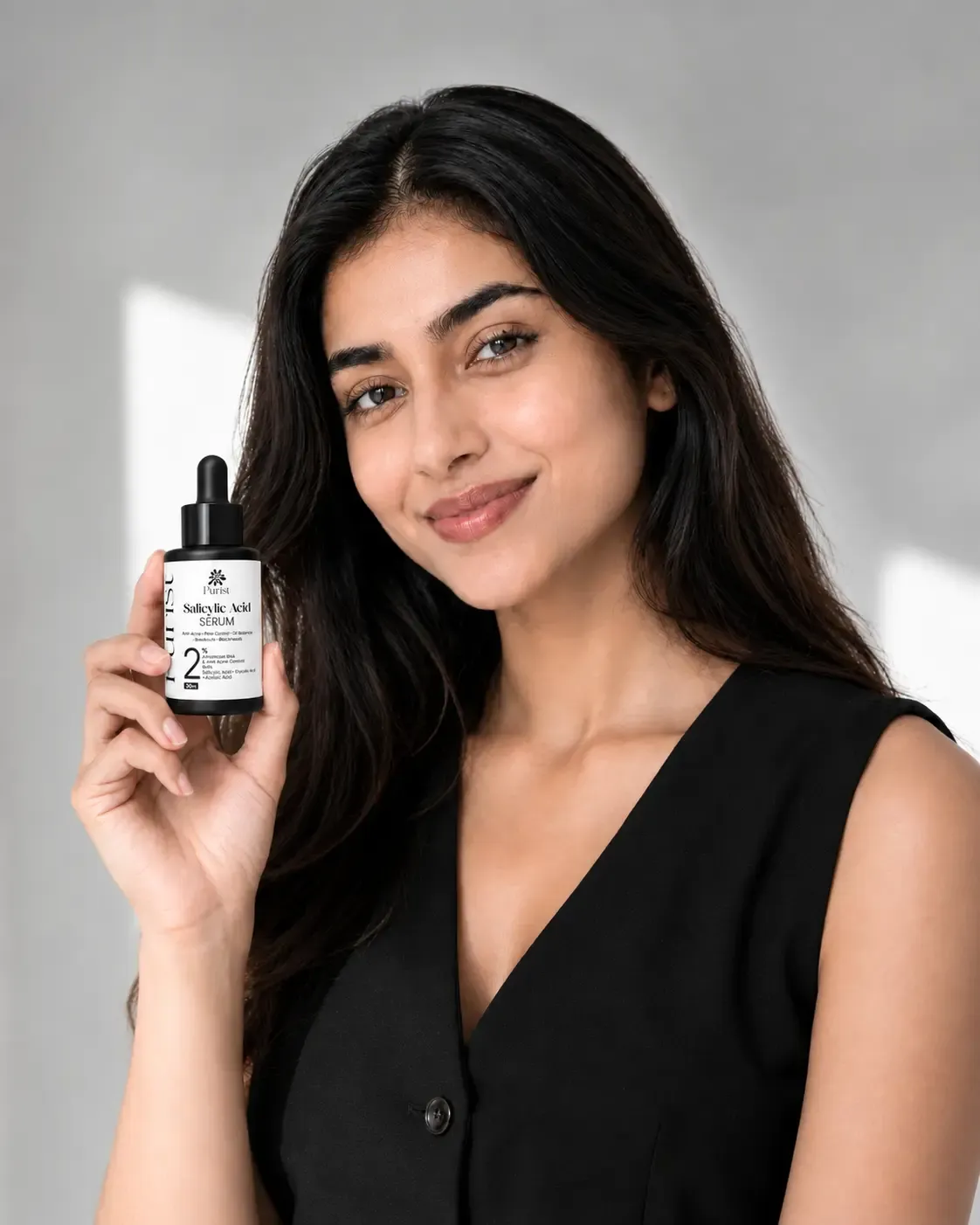
Shopping for a salicylic acid serum can get confusing fast. One bottle says 1%, another says 2%, and then you have products mixed with niacinamide, hyaluronic acid, botanical extracts, or other exfoliating ingredients.
The highest percentage is not automatically the best choice.
A good salicylic acid serum should match your skin, your main concern, and the rest of your routine. If you choose too strong a formula or use it too often, you may end up with dryness and irritation instead of clearer-looking skin.
This guide explains what to look for before adding one to your routine.
What Does Salicylic Acid Actually Do?
Salicylic acid is a beta hydroxy acid, commonly called BHA. It helps loosen dead skin cells and clear buildup around pores.
That makes it particularly useful when your main concerns are blackheads, whiteheads, excess oil, and clogged pores. The American Academy of Dermatology lists topical salicylic acid among the options used to help unclog pores and exfoliate the skin.
It is also different from simply scrubbing your face.
Physical scrubs work mainly through friction. Salicylic acid works chemically, helping loosen the material that contributes to clogged follicles.
That is why adding more scrubbing is usually not the answer when your skin is congested.
Start With Your Skin Concern
Before looking at percentages, ask a simpler question:
What am I actually trying to improve?
Blackheads and clogged pores
Salicylic acid can be a useful choice because it helps unclog pores. If blackheads are your main concern, look for a straightforward formula without a long list of potentially irritating actives.
Oily skin
If your skin becomes shiny quickly or you frequently deal with congestion, salicylic acid cleanser may fit well into your routine.
That does not mean you need to strip all the oil from your face. Your goal is balanced skin, not skin that feels tight after cleansing.
Mild breakouts
Salicylic acid can help with certain types of acne, particularly clogged pores and smaller blemishes. For persistent, painful, deep, or scarring acne, however, a serum may not be enough. A dermatologist can help determine the appropriate treatment.
Rough texture
Regular exfoliation can help improve the appearance of uneven texture. Start slowly rather than applying an exfoliating serum every night from day one.
Does a Higher Percentage Mean Better Results?
Not necessarily.
The appropriate strength depends on the product, your skin's tolerance, and how frequently you use it.
For context, the U.S. FDA's OTC acne monograph permits salicylic acid concentrations of 0.5% to 2% for topical acne products.
A simple way to think about it:
Strength
Who may consider it
0.5%
A gentler starting point
1%
People looking for moderate exfoliation
2%
People targeting more noticeable congestion or acne-prone skin
These are not rigid rules. A 1% formula used consistently may be a better choice for you than a 2% product that leaves your skin irritated.
Always follow the directions for the specific product rather than treating the percentage as a universal dosing rule.
Look Beyond the Salicylic Acid
The supporting formula matters.
Salicylic acid is only one part of a serum. Other ingredients can influence how comfortable the product feels and how well it fits into your routine.
Niacinamide
Niacinamide is commonly used in skincare formulas designed for oily or blemish-prone skin. It can complement a routine focused on maintaining a healthy skin barrier.
Hyaluronic acid
Hyaluronic acid is a humectant that helps attract water to the skin. Including hydrating ingredients can make an exfoliating routine more comfortable.
Soothing ingredients
Ingredients such as aloe vera, panthenol, or centella may be useful additions when you're trying to keep a routine gentle.
The important point is not to collect as many active ingredients as possible. A shorter, well-designed formula can make more sense than an overloaded one.
Check the Full Ingredient List
Don't buy a serum based only on the large percentage printed on the front.
Turn the bottle around.
Look at the complete ingredient list and consider whether the formula contains other exfoliating acids, drying ingredients, fragrance, or other components that your skin already struggles with.
This becomes especially important if you're already using acne treatments or prescription skincare.
DermNet advises caution when combining topical salicylic acid with other potentially irritating treatments and recommends following product directions carefully.
Be Careful With Your Existing Routine
This is where many skincare routines go wrong.
Someone buys a salicylic acid serum, keeps using their retinoid, adds a strong exfoliating toner, scrubs twice a week, and then wonders why their skin barrier feels awful.
You don't need to use every active ingredient on the same night.
If you're already using retinoids, benzoyl peroxide, AHAs, or other exfoliating products, introduce salicylic acid thoughtfully. Depending on your routine and skin sensitivity, alternating products may be more comfortable than layering them.
If you use prescription acne medication, ask your dermatologist or pharmacist how to combine products safely.
How Often Should You Use It?
Start conservatively.
For a new salicylic acid serum, using it a couple of times per week can be a reasonable way to see how your skin responds, provided that this matches the product's directions.
If your skin remains comfortable, you can follow the manufacturer's recommended frequency.
More is not automatically better.
Watch for persistent dryness, burning, redness, peeling, or unusual sensitivity. If those symptoms develop, reduce use or stop and reassess your routine.
Apply It the Right Way
A simple routine is usually enough:
- Cleanse gently.
- Pat your skin dry.
- Apply the salicylic acid product according to its instructions.
- Follow with a moisturizer.
- Use sunscreen during the day.
You don't need to scrub before applying salicylic acid. In fact, aggressive scrubbing can make irritated skin feel worse. The AAD recommends gentle, non-abrasive cleansing for people managing acne.
Don't Expect Overnight Results
This is probably the most overlooked part of skincare.
A new serum does not need to produce dramatic results in three days to be working.
Give your routine time.
The American Academy of Dermatology notes that acne treatments often need several weeks before improvement becomes noticeable, with 6–8 weeks commonly used as a period for evaluating an acne treatment.
Consistency matters more than constantly switching products.
What About Sensitive or Dry Skin?
Be more cautious.
Salicylic acid can be useful, but sensitive or dry skin may not tolerate frequent exfoliation well.
Start with less frequent use, keep the rest of your routine gentle, and pay attention to how your skin feels.
If your skin is already cracked, severely irritated, or peeling, adding another exfoliating active may not be the smartest move.
Sometimes the better skincare decision is to pause the actives and focus on basic cleansing, moisturizing, and sun protection.
When Should You See a Dermatologist?
A serum is not a replacement for professional acne treatment.
If you have deep, painful nodules, cystic acne, significant scarring, or breakouts that aren't improving with an appropriate routine, speak with a dermatologist. The AAD specifically recommends professional care for deeper or scarring acne because over-the-counter products may not be sufficient.
The same applies if your skin develops significant swelling, persistent burning, or a severe reaction after using a product.
A Simple Checklist Before You Buy
Before purchasing a salicylic acid serum, ask yourself:
- What is my main skin concern?
- What percentage of salicylic acid does the product contain?
- Is the formula suitable for my skin type?
- What other active ingredients are included?
- Am I already using another exfoliant or acne treatment?
- Can I realistically use the product consistently?
- Does the brand clearly explain how to use it?
- Does the product come from a reputable source?
These questions are more useful than simply searching for the strongest serum available.
The Bottom Line
Choosing a salicylic acid serum isn't about finding the most powerful bottle on the shelf.
It's about finding a formula that fits your skin and your routine.
Salicylic acid can be helpful for clogged pores, blackheads, whiteheads, and some acne concerns, but your skin still needs balance. Start slowly, follow the product instructions, avoid unnecessary layering, moisturize, and give the routine enough time to work.
And remember: clearer skin doesn't come from using more products. It usually comes from using the right products consistently.
Helpful Resources
For evidence-based information, these resources are worth bookmarking:
- American Academy of Dermatology acne guidance
- American Academy of Dermatology adult acne treatment
- DermNet salicylic acid guide
- FDA OTC acne drug monograph