CDP Implementation Challenges and How to Overcome Them
By Dhara Panwar
154 Views
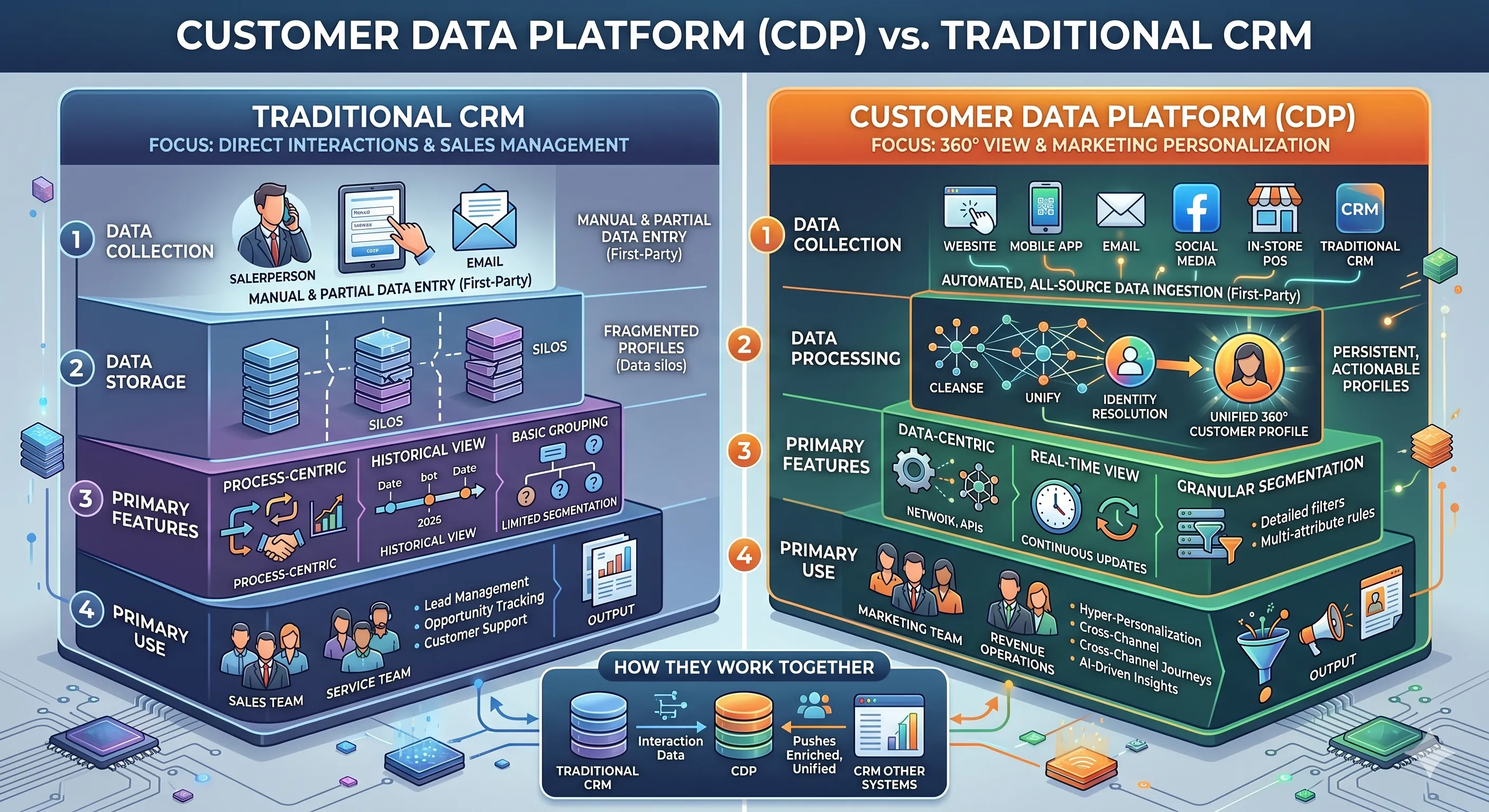
Customer data platforms have quickly become a core component of modern marketing and retail technology stacks. They promise a unified view of the customer, real-time personalization, and better marketing performance. However, while the benefits are clear, implementation is often more complex than expected.
Many organizations invest in a customer data platform with high expectations but struggle to unlock its full value due to technical, organizational, and strategic challenges. Understanding these challenges early and addressing them with a structured approach is critical for success.
Why CDP Implementation is Not Just a Technology Project
One of the most common misconceptions is treating a customer data platform as a plug-and-play solution. In reality, CDP implementation is not just about deploying software. It requires alignment across data, teams, and processes.
A CDP sits at the intersection of multiple functions:
- Marketing
- IT and engineering
- Data and analytics
- Customer experience teams
Without proper coordination, implementation can become fragmented, limiting its effectiveness.
Key Challenges in CDP Implementation
Data Silos Across Systems
Most organizations already have multiple systems in place, including CRM, ecommerce platforms, analytics tools, and marketing automation systems. Each of these systems stores its own version of customer data.
The challenge is integrating these data sources into a unified platform. Differences in data formats, structures, and identifiers can make integration complex.
Without resolving these silos, the CDP cannot create a complete customer profile.
Data Quality Issues
Even after integration, data quality can become a major bottleneck. Inaccurate, incomplete, or duplicate data reduces the effectiveness of segmentation and personalization.
Common issues include:
- Missing customer attributes
- Duplicate profiles
- Inconsistent naming conventions
- Outdated information
Poor data quality leads to poor decision-making, which directly impacts marketing performance.
Identity Resolution Complexity
One of the core functions of a customer data platform is identity resolution. This involves linking multiple interactions to a single customer across devices and channels.
For example, a user may:
- Browse anonymously on a website
- Later log in on a mobile app
- Make a purchase in-store
Connecting these interactions requires sophisticated matching techniques. Errors in identity resolution can result in fragmented profiles or incorrect associations.
Lack of Clear Use Cases
Another common challenge is implementing a CDP without clearly defined use cases. Organizations may invest in the technology without a clear plan for how it will be used.
This often leads to:
- Underutilization of the platform
- Difficulty measuring success
- Lack of internal buy-in
Without specific goals, it becomes difficult to demonstrate value.
Organizational Misalignment
CDP implementation requires collaboration across multiple teams. However, different teams often have different priorities.
For example:
- Marketing focuses on campaigns and personalization
- IT focuses on system integration and security
- Data teams focus on analytics and governance
Without alignment, implementation can slow down or become inconsistent.
Integration with Existing Systems
A customer data platform needs to connect with multiple tools to deliver value. This includes:
- Email platforms
- Advertising systems
- Ecommerce platforms
- Analytics tools
Integration challenges can arise due to incompatible systems, limited APIs, or lack of technical resources.
Real-Time Data Processing
Modern personalization requires real-time data. However, many organizations are used to batch processing.
Transitioning to real-time data processing involves:
- Updating infrastructure
- Redesigning workflows
- Ensuring low latency
This shift can be technically demanding.
How to Overcome CDP Implementation Challenges
Start with a Strong Data Foundation
Before implementing a CDP, it is essential to clean and standardize data. This includes:
- Removing duplicates
- Defining consistent data formats
- Filling missing values
Investing in data quality upfront reduces issues later.
Define Clear Use Cases
Identify specific use cases that the CDP will support. Examples include:
- Personalized email campaigns
- Customer segmentation
- Real-time recommendations
Start with high-impact use cases that can demonstrate quick wins.
Establish Cross-Team Collaboration
Create a governance structure that includes stakeholders from marketing, IT, and data teams. Regular communication ensures alignment and smooth execution.
Choose the Right Identity Resolution Approach
Use a combination of deterministic and probabilistic matching techniques to improve accuracy. Continuously monitor and refine identity resolution processes.
Invest in Scalable Integration
Ensure that the CDP can integrate easily with existing systems. Use APIs and middleware where necessary to streamline data flow.
Adopt a Phased Implementation Approach
Instead of implementing everything at once, take a phased approach:
- Phase 1: Data integration and unification
- Phase 2: Segmentation and analytics
- Phase 3: Activation and personalization
This reduces complexity and allows for iterative improvements.
Enable Real-Time Capabilities Gradually
Transitioning to real-time processing can be done in stages. Start with key use cases such as triggered emails or website personalization.
Measuring Success
To ensure that the CDP delivers value, define clear metrics such as:
- Improvement in conversion rates
- Increase in customer engagement
- Reduction in marketing costs
- Growth in customer lifetime value
Regular monitoring helps identify areas for improvement.
The Role of Leadership in Successful Implementation
Leadership plays a crucial role in CDP implementation. Executive support ensures:
- Proper allocation of resources
- Alignment across teams
- Long-term commitment
Without leadership backing, implementation efforts may lose momentum.
Future-Proofing Your CDP Strategy
As customer expectations evolve, CDP strategies must adapt. Key considerations include:
- Supporting first-party data strategies
- Ensuring compliance with privacy regulations
- Leveraging AI for advanced insights
- Scaling personalization efforts
A flexible and scalable approach ensures long-term success.
Conclusion
Implementing a customer data platform is a complex but highly rewarding process. While challenges are inevitable, they can be overcome with the right strategy, tools, and collaboration.
By focusing on data quality, clear use cases, and cross-team alignment, businesses can unlock the full potential of their CDP. In doing so, they can deliver better customer experiences, improve marketing performance, and drive sustainable growth.
Related Reading
Expert Insights: Navigating the Complex World of Software Development
Welcome to our in-depth exploration of Software Development. In an era defined b...
Top 10 Hidden Secrets About Software Development You Need to Know
Welcome to our in-depth exploration of Software Development. In an era defined b...